

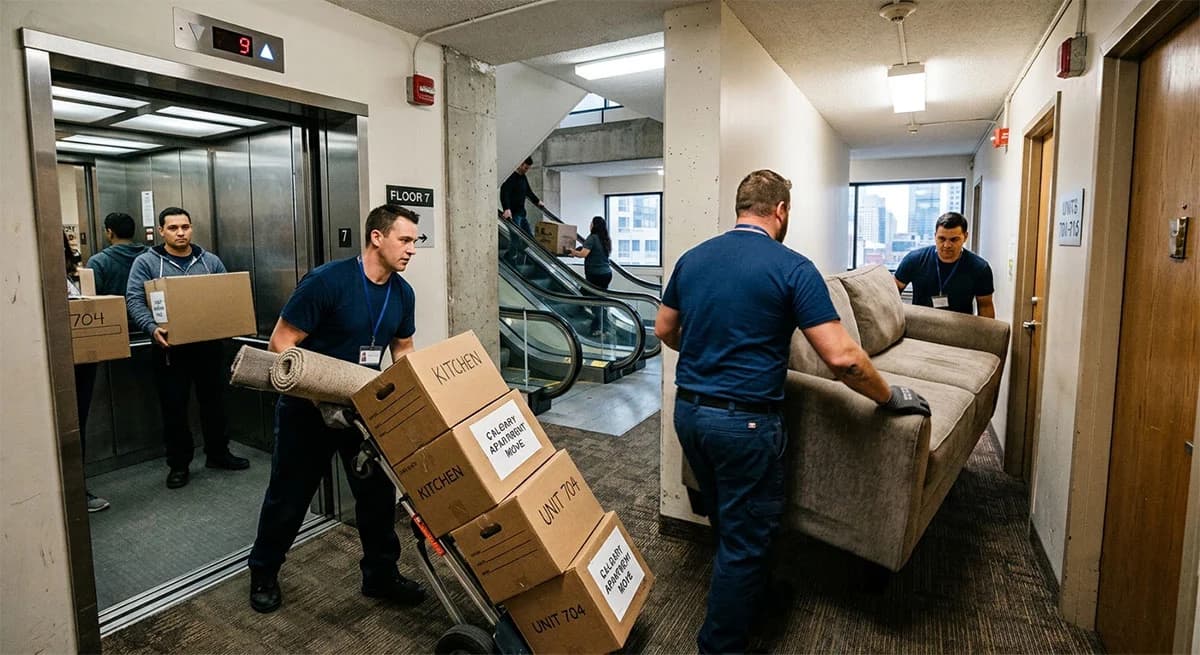
Moving into or out of an apartment can be more challenging than moving into a detached home. What makes it complicated? - stairs, elevators, narrow hallways, limited loading space, and building rules. All these affect how furniture and boxes get from your unit to the moving truck.
Practical apartment-moving tips help from the start. They can also prevent an awkward situation where a couch reaches the hallway but cannot make the next turn.
If you hire a full-service mover, it's okay. They take the responsibility. Otherwise, you'll need to learn how to handle apartment moves before you step in.
Why Apartment Moves Can Be More Complicated
Apartment moves concentrate a lot of activity into shared spaces. A large couch may fit inside the unit but not around a stairwell landing, an elevator may need to be reserved, and the moving truck may have limited access to the building entrance.
The distance between the apartment and the truck matters. The number of stairs, a long hallway, or a lengthy walk from an underground parkade can increase loading time, even if you are only moving to a nearby home or apartment.
Building rules cannot be ignored. Some properties have specific rules for moving hours, elevator booking, or use of common spaces for loading. However, local movers know all that. Review them with the relevant person or authority, rather than assuming access will be available anytime or that your moving crew already knows.
How Professionals Handle Stairs, Elevators and Tight Hallways
Their training, experience, and hard work help them get through these tough situations.
Planning the Access Route Before Moving Day
Experienced movers think about the route before speed. They check entrances, doors, hallway widths, stair turns, elevator dimensions, and the distance between the building and the truck. Make this easier by measuring bulky pieces, such as sectionals, bed frames, desks, and dining tables, ahead of time. If something will not clear a doorway or corner, planned disassembly is much better than discovering the problem after the furniture has already been carried downstairs.
Moving Furniture Safely Through Narrow Hallways
To protect a piece, a clear route and team coordination become important when everyone knows in advance when to stop, lift, or change direction.
The right equipment and essential furniture supplies also play a bigger role in protecting furniture during loading, transport, and unloading.
If a heavy piece of furniture is detachable, it's easier and safer to move in parts.
Handling Stairs
Stairs can turn an otherwise straightforward apartment move into a demanding one. Furniture weight is only part of the problem; stair width, landings, railings, ceiling height, and sharp turns can all affect how an item needs to be carried.
Movers generally look at the entire staircase before starting with a bulky piece. That gives them a chance to identify tight turns and decide where they may need to reposition their grip.
Heavy or oversized furniture isn't a good candidate for trial and error. If an item is difficult to control or requires several people to lift safely, professional handling is usually more practical than attempting to force it through the space.
Using Elevators Efficiently
An elevator can make your job easier. You may need permission to access it, as the building may require a reservation.
So, make sure you have booked before moving day. Also, clear your queries with the building manager about dimensions, load restrictions, and any protective requirements. Every building has its own rules; be sure to respect them.
Have packed boxes and prepared furniture ready before your reserved time begins. That keeps elevator trips productive instead of using a limited booking window to finish packing or disassemble furniture.
If residents will still be sharing the elevator, allow additional time and avoid blocking access longer than necessary.
Protecting Walls, Floors and Doors
An apartment move passes through spaces everyone in the building uses. Door frames, lobby floors, corners, and elevator interiors can receive repeated contact if furniture travels through them without adequate clearance or protection.
Professional crews carry blankets, floor protection, corner guards, and other materials to protect property and items being moved.
Door frames, lobby corners, and elevator entrances are especially easy to bump with bulky furniture.
Residents can help by keeping hallways and entrances clutter-free. A clear route gives movers more space to handle furniture without brushing against walls or stepping around loose items.
Calgary Apartment Moving Challenges to Plan For
Calgary weather can change quickly around an apartment entrance. Snow, ice, slush, and wet floors can make the trip between the building and the moving truck harder, especially when movers carry furniture that limits their view of the ground.
Maintain sidewalks, stairs, and loading areas for crew members. Also, the moving plan should allow a little flexibility for winter, when roads or walking surfaces may be poor.
Parking deserves advance attention as well. A convenient curbside space you noticed during an apartment viewing may be restricted or occupied on moving day, especially in busier parts of Calgary.
Also confirm whether the property has a designated loading area, any restrictions, moving-time limitations, or underground access limitations.
Apartment Moving Tips Before Moving Day
Start by confirming your building's rules. Find out whether you need to reserve an elevator, use a particular entrance, or follow a specific moving window.
Next, measure your largest furniture and compare those measurements with the narrowest parts of the route. Check doors, hallways, elevators, and stair landings, not just the apartment entrance.
Where practical, prepare furniture before the moving crew arrives. Secure loose parts, empty furniture that needs to be moved empty, and make sure fragile items receive suitable protection. Keep keys, access cards, elevator information, and the property manager's contact details somewhere easy to reach.
It also helps to keep a separate bag with medications, identification, chargers, toiletries, and first-night essentials. You do not want to search through stacks of boxes for something you need immediately.
Finally, check the weather and outdoor access. During a Calgary winter move, conditions around the entrance may matter as much as conditions inside the building.
When Professional Apartment Movers Make Sense
Some apartment moves are manageable with a few helpers, but only when the furniture is light and access is straightforward.
Professional movers become more useful when the move involves several flights of stairs, oversized furniture, tight corridors, high-rise access, or a limited elevator reservation.
Difficult winter conditions can add another reason to bring in experienced movers. Carrying large furniture becomes more complicated when the route includes icy steps, wet entrances, or a long walk between the building and truck.
If you are searching for apartment moving services in Calgary, give the moving company accurate access information when requesting a quote. Mention your floor, elevator situation, stairs, distance to the loading area, and any large or unusually shaped furniture.
Bottom Line
When you factor in the building, local conditions, and moving size, it can make an apartment move easy and safe. Without a day-ahead deadline, prioritize these tasks: measure bulky furniture, book the elevator, arrange parking to stop the truck, plan the carrying route, etc.
Every little preparation can prevent delays and make it easier to move your belongings carefully from one home to the next.
If your move involves difficult stairs, a tight hallway, or restricted elevator access, discuss those details early with your moving agency. Good preparation gives everyone more room to work carefully and helps keep the move organized from the apartment door to the new home.