

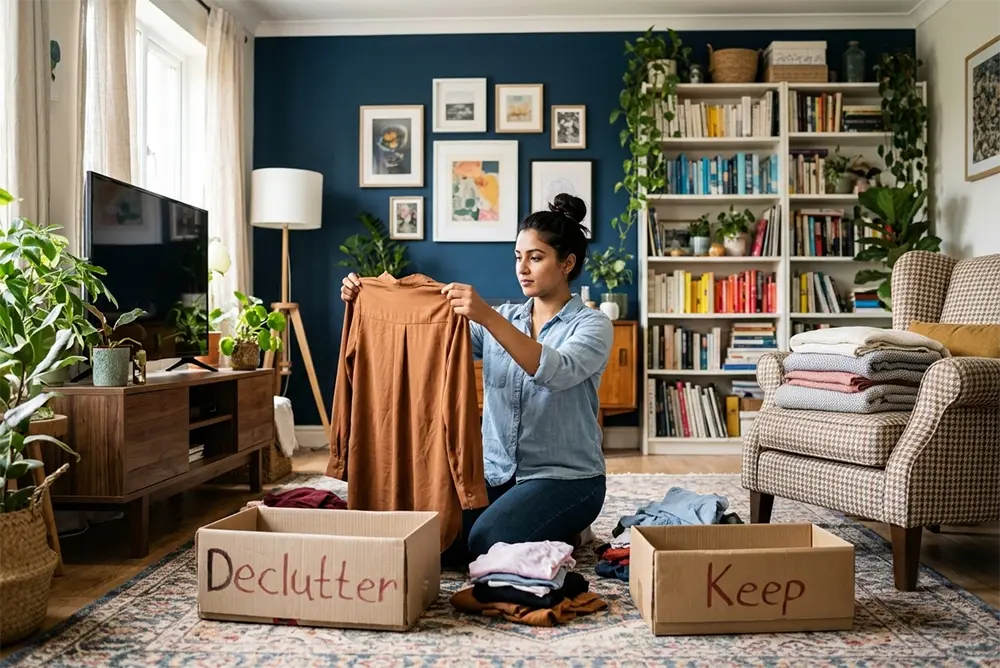
Forgotten things surprise us when we find them while packing for a long-distance move. We get disappointed about why we did not discover it before or why we have not decluttered it yet. When it no longer has any value.
Common things we most find - old clothes, repairable electronics, half-empty storage bins, etc.- add up quickly once we start.
So that is exactly why decluttering your home should be part of the moving plan. Packing is not only a matter for the item itself; it also occupies space in the truck, needs to be loaded and transported, and requires space at the other end.
Decluttering the home for long-term distance means deciding what essentials are genuinely worth taking with you.
Why Decluttering Matters Before a Long-Distance Move
Maybe the cost to carry any extra box does not feel like a big deal for a local move.
But every extra belonging is part of a much larger shipment. You are paying for it during loading, transport, and unloading. It becomes a part of your budget when it is calculated.
The rule is simple: you should have less work to do and only the essentials. Fewer belongings mean less packing, labelling, and loading.
However, the size and contents of your shipment can matter in a long-distance move when preparing an estimate, but pricing varies by mover and type of service. Any item can affect the moving estimate too.
Decluttering also gives you a chance to think about those belongings that are not very usable. Then why should you pay to transport it hundreds of kilometres? Is it worth moving that one?
When Should You Start Decluttering?
As early as you think.
Start from where? Choose the areas you do not use every day. Such as storage rooms, the garage, spare bedrooms, extra kitchenware, and the back of closets.
Means clear those things that will not disrupt your normal routine.
Always choose one manageable area and finish it before starting the next one.
For each item, make a clear decision: keep, sell, donate or discard.
It can create chaos to decide what stays and what goes when you are packing, changing your address and preparing for moving day.
Also avoid “decide later” because you will eventually have to make the same decisions under more pressure.
Give yourself enough time to make decisions; it will make your transition smooth.
If you want to know how to organize the rest of your move, the Before Moving Day Checklist can help you.
What Should You Get Rid of Before Moving?
Prioritize the items that you feel will no longer be used in the new place, such as broken items, expired products, old clothes you no longer wear and other extra things.
Then think about the belongings that are harder to judge. Whether you use the item and it fits your next home. Is it worth spending to move it? It is important for bulky, inexpensive furniture.
Sentimental belongings need a little more patience. Keep the things that genuinely matter.
The goal is not to own as little as possible. It is to avoid wasting your time and moving space for those belongings you already know you do not want anymore.
How Decluttering Makes a Long-Distance Move Easier
How Does Decluttering Make a Long-Distance Move Easier?
Though it seems difficult, we will have to do it.
Once you have decided what to carry, sell, or donate, the rest of the move becomes easier to organize.
Means each box contains only belongings that matter to you, and you choose to pick intentionally.
Loading can become easier as well. You can focus on protecting the pieces that are actually useful or associated with unforgettable memories.
Decluttering can also help in comparing long-distance moving options. If you have a clear picture of your moving inventory, you can expect a practical estimate rather than a rough one.
At The End: A Lighter Move Starts Before the Boxes
Starting early is a practical reason. You are already handling every cupboard, drawer and storage bin, but then also take stock of what you own.
It helps to decide what deserves a place in the next home. Or you should pay to move it there.
Easy way: pick a small section of the house, a room or a cupboard, to find the belongings that can be sold or donated.
At your new home, you can feel relaxed just after setting your useful things in their appropriate place. No worry to find a space for the belongings that did not matter.